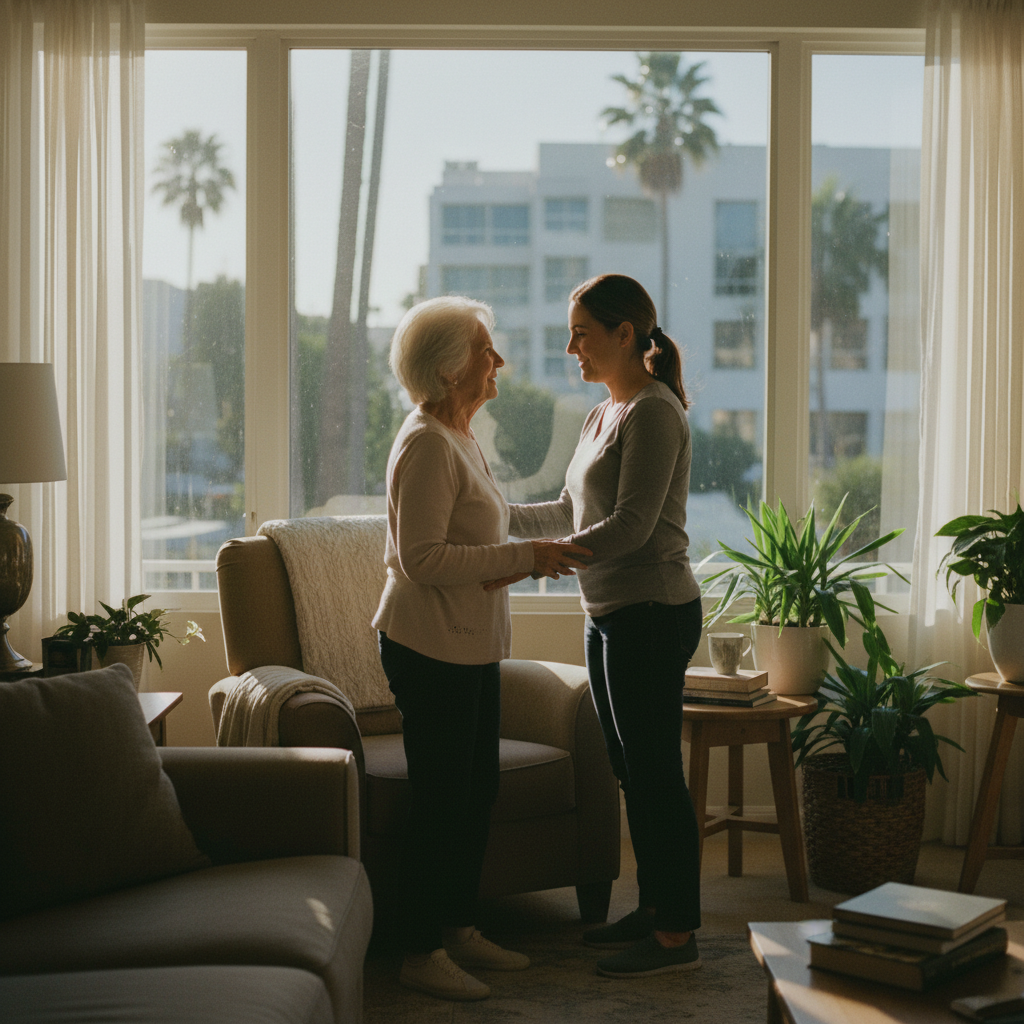
dementia care at home is increasingly the first choice for Century City families when a loved one receives an Alzheimer’s or memory-loss diagnosis — and the scale of need makes the urgency clear: according to the Alzheimer’s Association 2025 Alzheimer’s Disease Facts and Figures report, more than 6.9 million Americans age 65 and older are currently living with Alzheimer’s dementia, and the overwhelming majority express a strong preference to remain in a familiar home environment rather than transition to a residential facility. If your parent or loved one has recently received a cognitive impairment diagnosis — or if safety concerns at home have reached a point where independent living is no longer viable — this guide explains what professional in-home dementia care looks like, who it serves, what it costs in Los Angeles in 2026, and how senior home care Givers 247 helps Century City families build a sustainable care plan rooted in safety, dignity, and expert support.
What Is Dementia Home Care?
Dementia home care is a structured, non-medical form of in-home personal support designed specifically for adults living with Alzheimer’s disease, vascular dementia, Lewy body dementia, frontotemporal dementia, or other forms of progressive cognitive impairment. Unlike general companion care or light housekeeping, dementia-focused home care requires caregivers who have received specific training in memory-loss communication strategies, behavioral redirection, safety monitoring, and stage-appropriate engagement techniques.
At its core, dementia home care means a trained and licensed caregiver comes to your loved one’s residence — a private home, condominium, or apartment in Century City or an adjacent neighborhood — and provides hands-on daily assistance while using evidence-based approaches to reduce agitation, prevent wandering, and maintain a predictable routine. Techniques such as validation therapy (engaging your loved one within their experienced reality rather than correcting factual errors), structured daily scheduling to prevent sundowning behaviors, and simple environmental modifications that reduce fall and elopement risk are all part of professional dementia care delivery.
California regulates home care organizations under Health & Safety Code §1569, which establishes the licensing standards, caregiver background check requirements, and operational obligations for Home Care Organizations (HCOs) operating in the state. Choosing a licensed agency rather than an independent, unlicensed caregiver ensures your family has legal recourse, verified credentials, and organizational liability protection. Senior Home Care Givers 247 is a fully licensed California Home Care Organization in compliance with all applicable state requirements.
Dementia home care can be structured on a part-time, full-time, or 24/7 live-in basis depending on your loved one’s current disease stage, functional independence, and your family’s available support. An early-stage client may require just a few daily hours of supervision and cognitive engagement; a late-stage client may need continuous around-the-clock personal care, incontinence management, and overnight safety monitoring.
Who Benefits Most From Dementia Home Care?
Dementia home care is most appropriate for older adults whose cognitive decline has begun to affect their daily safety or quality of life, but who do not yet require the round-the-clock skilled nursing services provided in a licensed memory care facility. Several populations benefit most.
Adults with early-to-mid stage Alzheimer’s or related dementia are the most common home care candidates. At these stages, your loved one may still recognize family members, hold conversations, and maintain preferences — but may struggle to prepare meals without leaving burners on, manage complex medications, or safely navigate familiar neighborhoods without becoming disoriented.
Seniors living alone in Century City or surrounding neighborhoods face compounded risk. Cognitive impairment in a person who lives independently in a high-rise apartment near Constellation Boulevard or Avenue of the Stars can manifest in silent, dangerous ways: forgotten medications, unlocked doors, skipped meals, or nighttime wandering. A trained caregiver brings structured oversight without requiring relocation.
Families navigating a trigger event frequently begin dementia home care following a fall, a medication error, a kitchen accident, evidence of self-neglect such as significant weight loss or unpaid bills, discharge from a hospital or rehabilitation facility, or a formal neurologist or geriatrician diagnosis. These events often signal that the current level of family oversight is no longer sufficient.
Caregiving family members approaching burnout represent an often-overlooked beneficiary. According to the Family Caregiver Alliance, informal caregivers of individuals with dementia provide an average of over 47 hours of care per week — well beyond what is physically or emotionally sustainable without structured relief. Respite care services exist specifically to protect the health of family caregivers while ensuring consistent support for the person with dementia.
Post-hospital seniors transitioning home are at elevated risk of adverse events during the first 30 days after discharge. In-home dementia support during this window reduces the likelihood of rehospitalization and helps re-establish safe daily routines.
Services Included
Senior Home Care Givers 247 provides a comprehensive suite of in-home dementia care services, each tailored to your loved one’s current cognitive stage, physical health status, and family preferences. Every service is delivered by licensed, insured, bonded, and background-checked caregivers with documented dementia care training.
- Memory Care Supervision and Safety Monitoring: Continuous or scheduled oversight to prevent wandering, falls, unsafe appliance use, and other behavioral safety risks common in moderate and advanced dementia stages.
- Personal Care Assistance: Respectful, stage-appropriate hands-on help with bathing, dressing, grooming, oral hygiene, and toileting, adapted to your loved one’s comfort level and preserved functional abilities.
- Medication Reminders: Verbal and visual cueing to ensure prescribed medications are taken on schedule; caregivers coordinate with home health nurses when skilled nursing services are also in place.
- Meal Preparation and Nutrition Monitoring: Planning and preparing nutritious, texture-appropriate meals; monitoring food and fluid intake to identify and report early signs of dehydration or unintentional weight loss.
- Structured Cognitive Engagement Activities: Evidence-based activities designed to maintain cognitive function and reduce behavioral symptoms — including music therapy, reminiscence conversation, puzzles, sensory stimulation, and gentle physical exercise tailored to preserved interests and current capabilities.
- Behavioral Redirection and Emotional Support: Trained, calm responses to agitation, sundowning, repetitive questioning, and confusion, using validation therapy and person-centered approaches rather than correction or confrontation.
- Light Housekeeping and Laundry: Maintaining a clean, organized, and hazard-reduced home environment that supports predictable daily routines and minimizes fall risk.
- Transportation and Medical Appointment Accompaniment: Safe, reliable accompaniment to neurologist visits, therapy sessions, pharmacies, and social outings, supporting continuity of medical care and reducing isolation.
- Companion Care and Social Engagement: Structured conversation, reading aloud, gentle outdoor walks, and social stimulation that address the loneliness and depression that frequently accompany cognitive decline.
- Family Communication and Daily Care Notes: Regular written or verbal reports to designated family members detailing changes in behavior, appetite, mobility, mood, or safety concerns — ensuring you remain fully informed regardless of physical proximity.

How Dementia Home Care Works — From Free Assessment to Care Start
Beginning dementia home care through Senior Home Care Givers 247 follows a clear, structured process designed to protect your loved one from day one and give your family well-founded confidence in the care being delivered.
Step 1 — Free In-Home Assessment. A care coordinator visits your loved one’s home — in Century City or anywhere within our Los Angeles service area — to evaluate cognitive and physical function, walk through the home for safety hazards, review current medications and medical history, and discuss your family’s scheduling needs, communication preferences, and budget. This assessment is provided at no charge and carries no obligation to proceed.
Step 2 — Personalized Written Care Plan. Based on the assessment, our team develops a written care plan that documents the specific services required, the weekly schedule, medication reminder protocols, dietary needs, known behavioral triggers to avoid, emergency contacts, and escalation procedures. The care plan is reviewed with you before care begins and updated whenever your loved one’s needs change.
Step 3 — Caregiver Matching. We match your loved one with a caregiver whose clinical experience, personality, language skills, and schedule align with the care plan requirements. For dementia clients, we prioritize caregivers with documented dementia-specific training and verified experience in behavioral redirection and compassionate communication.
Step 4 — Supervised Introduction and Care Start. During the initial shifts, a supervisor may be present to facilitate the introduction, confirm the care plan is being followed correctly, and incorporate your feedback. This transition period is critical to establishing trust between your loved one and the caregiver.
Step 5 — Ongoing Quality Assurance and 24/7 Availability. Supervisors conduct scheduled and unannounced check-ins, caregivers submit daily activity logs, and family members can reach our office at any time. We maintain 24/7 staffing availability — if your assigned caregiver encounters an emergency, our on-call team arranges coverage before care is interrupted. Call (310) 269-1206 at any hour to reach a live coordinator.
Los Angeles Neighborhoods We Serve
Senior Home Care Givers 247 provides professional dementia home care throughout Greater Los Angeles, with specific familiarity with the communities where our clients live and the logistical realities of each neighborhood.
We serve Century City families first — including residents in the high-rise residential buildings near Avenue of the Stars, Century Park East, Constellation Boulevard, and the residential streets adjacent to the Westfield Century City corridor. Century City’s mix of working professionals, affluent retirees, and multigenerational families creates distinct scheduling, communication, and care coordination needs that our team has extensive experience addressing.
Our full Los Angeles service area includes: Beverly Hills, Westwood, Brentwood, Santa Monica, Pacific Palisades, Venice, Marina del Rey, Mar Vista, Culver City, Hancock Park, Sherman Oaks, Studio City, Burbank, Glendale, Pasadena, Manhattan Beach, and Long Beach. We also serve families whose loved ones reside in independent living communities or assisted living facilities within our coverage area who require additional one-on-one dementia support beyond what the facility provides. If your loved one’s neighborhood is not listed above, call us — we confirm coverage during your initial inquiry.
Cost & Payment Options
In-home dementia care represents a meaningful and ongoing financial commitment. Understanding your payment options clearly — before care begins — is essential to building a plan your family can sustain over months or years.
Private Pay Rates. In greater Los Angeles, in-home senior care from a licensed agency typically ranges from $35 to $45 per hour in 2026, depending on the level of care required, shift timing (daytime, overnight, or weekend), and whether the care involves dementia-specific behavioral management. For clients requiring 12 or more daily hours of support, live-in or overnight care priced at a daily flat rate is frequently more cost-effective than hourly billing. Your care coordinator will model both options during the assessment.
Long-Term Care Insurance. Many long-term care insurance policies cover in-home dementia care when a licensed agency is providing services and the client meets the policy’s benefit triggers — typically defined as requiring assistance with two or more Activities of Daily Living (ADLs) or having a documented cognitive impairment. We work directly with your insurer to provide the clinical documentation required for claims submission and ongoing authorization.
VA Aid & Attendance Benefit. Eligible veterans and surviving spouses may qualify for the VA Aid & Attendance pension supplement, which provides additional monthly income specifically to fund in-home personal care and supervision. In 2026, the benefit reaches up to $2,642 per month for a veteran with a qualified dependent. Our team can identify likely eligibility and connect your family with a VA-accredited benefits counselor at no charge.
IHSS — In-Home Supportive Services. California’s IHSS program, administered through Medi-Cal, funds in-home care services for eligible low-income seniors and individuals with disabilities. Medi-Cal-eligible clients with a documented dementia diagnosis may qualify for substantial funded care hours. Contact your county’s Department of Public Social Services for an eligibility determination and authorized hours assessment.
Medicare Home Health Limitations. Medicare Part A and Part B cover skilled home health services — nursing visits, physical therapy, occupational therapy — when a physician certifies medical necessity and the patient meets homebound criteria. However, per CMS Medicare Home Health Payment guidelines, Medicare does not cover ongoing custodial personal care — bathing, dressing, supervision, companionship — when skilled nursing is not concurrently required. Families should not plan on Medicare as a primary funding source for long-term dementia home care. KFF research on Medicaid long-term services and supports outlines how Medicaid — not Medicare — funds the majority of long-term in-home care for income-eligible seniors.
To discuss which payment combination works best for your family’s situation, call (310) 269-1206 or submit a request through our online contact form.
Why Choose Senior Home Care Givers 247
Selecting an in-home dementia care agency involves evaluating both caregiver qualifications and organizational reliability. Here is what distinguishes Senior Home Care Givers 247 from unlicensed or loosely structured alternatives.
Fully licensed, insured, and bonded. Senior Home Care Givers 247 operates as a licensed California Home Care Organization under Health & Safety Code §1569. Every caregiver placed in a client home has passed a background check through both California’s fingerprint-based Live Scan system and federal databases before their first shift — a legal requirement under California law that independent caregivers are not subject to.
Dementia-trained and certified caregivers. Our home health aides complete dementia-specific training prior to initial placement and participate in ongoing continuing education covering Alzheimer’s disease progression, behavioral redirection strategies, communication techniques for late-stage dementia, and home safety protocols. All caregivers hold current CPR and first aid certification.
Medicare and Medicaid accepted. We accept Medicare and Medicaid where applicable under program rules, and our billing staff works directly with long-term care insurance carriers to simplify claims processing and minimize administrative burden on families.
24/7 availability — every day of the year. A live coordinator is available at (310) 269-1206 at all hours, including evenings, weekends, and holidays. If a scheduled caregiver cannot complete a shift for any reason, our on-call staffing protocol ensures replacement coverage is arranged before a gap in care occurs.
Transparent, consistent family communication. Families receive daily caregiver notes, regular supervisor check-in reports, and direct access to care coordinators who can answer clinical and logistical questions. You remain an informed participant in your loved one’s care regardless of physical distance.
Flexible scheduling without long-term contracts. Care begins when you need it and scales with your loved one’s changing condition — from a few hours of daily companion care to full-time or live-in coverage — without requiring a long-term minimum commitment. Visit our FAQ page or contact us online to schedule a no-obligation assessment with a care coordinator.
Frequently Asked Questions
Q: What stage of dementia is appropriate for home care rather than a memory care facility?
Early-to-moderate stage dementia is generally well-suited to professional in-home care, particularly when your loved one still benefits from a familiar home environment and responds positively to one-on-one caregiver relationships. Late-stage dementia involving complex medical needs — such as feeding tubes, wound care, or frequent behavioral crises requiring clinical intervention — may eventually require a licensed memory care facility. Our care coordinators in Century City will assess your loved one’s current functional status during the free in-home evaluation and give you a frank, experience-based recommendation on the most appropriate level of care. We do not push families toward home care when a higher-acuity setting is genuinely safer.
Q: Will Medicare pay for my parent’s dementia care at home in Century City?
Medicare covers skilled home health services — nursing, physical therapy, occupational therapy — when a physician certifies medical necessity and your loved one meets the homebound definition. It does not cover ongoing non-skilled custodial care such as bathing assistance, personal care, supervision, or companionship when provided without concurrent skilled nursing. This means the majority of in-home dementia support is not a covered Medicare benefit. Families in Century City typically fund non-skilled dementia home care through private pay, long-term care insurance, VA Aid & Attendance, or California’s IHSS program for Medi-Cal-eligible seniors. Our coordinators will walk through each option with you at no charge.
Q: How quickly can dementia home care start in Century City after the initial assessment?
In most cases, Senior Home Care Givers 247 can begin care within 24 to 48 hours of the completed in-home assessment and signed service agreement. For urgent situations — such as a family caregiver who has been hospitalized, a recent dementia-related crisis, or a same-day hospital discharge — we make every effort to place a qualified caregiver on an expedited basis. Century City and West Los Angeles are within our core service area, so caregiver availability is generally strong. Call (310) 269-1206 to discuss your timeline, and we will confirm a realistic start date during your first conversation.
Q: What happens if my parent refuses care from the assigned caregiver?
Resistance to care is extremely common in individuals with dementia, particularly in the early-to-moderate stages when insight into the need for help is still partially intact. Our caregivers are trained in gentle introduction techniques — arriving initially as a “visitor” or “helper for you,” focusing on preferred activities, and building familiarity gradually over the first several shifts before transitioning to personal care tasks. If a specific caregiver is not a good fit after reasonable effort, we will rematch your loved one with a different caregiver at no additional cost. We do not consider a difficult first introduction to be a failure; it is an expected part of dementia care that our team is prepared to navigate.
Q: Does my parent need a formal dementia diagnosis to start home care in Century City?
A formal diagnosis is not required to begin home care services. Many families contact us because they have observed concerning cognitive or behavioral changes in a parent — increased forgetfulness, confusion about familiar places, changes in personality, or declining self-care — before a diagnosis has been confirmed by a physician. We can begin supportive in-home care based on a functional needs assessment while a formal diagnostic workup is in progress. If your family is concerned but uncertain, our care coordinator can also help connect you with geriatric assessment resources in the Century City, Beverly Hills, and Westwood area. Call (310) 269-1206 to start the conversation.
References
- Alzheimer’s Association — 2025 Alzheimer’s Disease Facts and Figures
- Centers for Medicare & Medicaid Services — Medicare Home Health Prospective Payment System
- KFF — Home and Community-Based Services: Medicaid Long-Term Services and Supports
Need Home Care in Century City?
Free, no-obligation care assessment. 24/7 availability. Care can start within days.