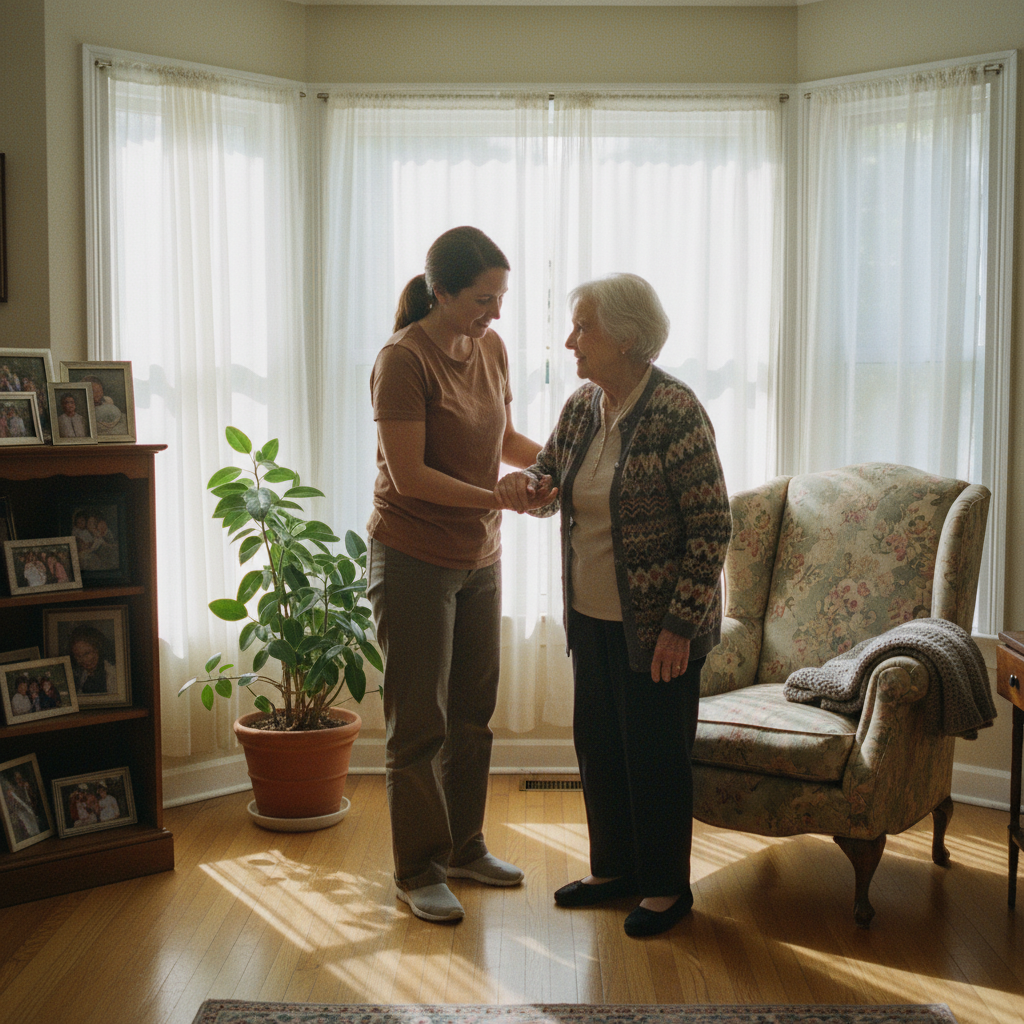
Using the 5-chunk pipeline as a quality scaffold, generating the post now.
dementia care at home is among the most critical decisions Hancock Park families face when a parent or spouse receives a cognitive decline diagnosis. According to the Alzheimer’s Association’s 2025 Alzheimer’s Disease Facts and Figures, approximately 6.9 million Americans age 65 and older are living with Alzheimer’s dementia — and the overwhelming majority express a strong preference to remain in their own homes. If your loved one is showing signs of memory loss or has already been diagnosed, this guide explains what professional in-home dementia care looks like, who it serves, what it costs in Los Angeles in 2026, and how senior home care Givers 24/7 supports families throughout Hancock Park with licensed, compassionate, around-the-clock care.
What Is Dementia Care?
Dementia care is a specialized category of in-home support designed for older adults experiencing progressive cognitive impairment — including Alzheimer’s disease, vascular dementia, Lewy body dementia, and frontotemporal dementia. It differs from standard companion or personal care in that it is built around the behavioral, emotional, and safety challenges that emerge as memory and executive function decline.
Professional dementia home care centers on trained caregivers who understand how these conditions progress and how to respond constructively when symptoms appear. That means using validation-based communication instead of correction, redirecting agitated or repetitive behaviors with calm and familiar cues, and maintaining predictable daily routines that reduce confusion and anxiety. It also means actively monitoring for wandering risk, missed medications, unrecognized pain, and early signs of infection — all situations that people with dementia may be unable to report themselves.
In California, in-home care agencies providing dementia services operate under the Home Care Services Protection Act, with additional oversight standards referenced in Health & Safety Code §1569 governing residential and community-based elder care. For Hancock Park families, working with a licensed agency means every caregiver has cleared state and federal background checks, completed required dementia-specific training, and is actively supervised by a care manager accountable to the California Department of Social Services.
The purpose of dementia home care is not to displace your loved one’s world — it is to support it. With the right caregiver, your parent can remain in the Hancock Park home they know, surrounded by familiar routines, objects, and neighbors, even as their memory changes.
Who Benefits Most From Dementia Care?
Several family situations make professional in-home dementia support especially appropriate — and in some cases, urgent.
Seniors in the early to middle stages of Alzheimer’s or another dementia benefit most from consistent caregiver relationships. Familiar faces and predictable schedules are clinically shown to reduce anxiety and behavioral episodes in people with dementia, and early intervention slows the rate at which families need to escalate to higher-cost care settings.
Family caregivers who are approaching burnout represent a critical group. According to the Family Caregiver Alliance, more than 60 percent of family caregivers report significant physical and emotional strain. Bringing in a professional caregiver — even for 20 hours per week — allows adult children and spouses to recover while knowing their loved one is safe and supervised.
Seniors who have recently been hospitalized or experienced a fall face elevated risk of a second event. A trained dementia caregiver monitors mobility changes, ensures medications are taken as prescribed, and alerts the care team to warning signs before they become emergencies.
Families managing behavioral symptoms — including sundowning, repetitive questioning, nighttime agitation, or resistance to bathing — benefit from caregivers specifically trained in dementia de-escalation. These situations are exhausting and sometimes unsafe for untrained family members to navigate alone.
Couples where one spouse has dementia often need in-home help so the well spouse can maintain their own health, social life, and independence — especially when the person with dementia requires near-constant supervision throughout the day.
If any of these situations describes your household, the appropriate next step is a free in-home care assessment. Contact Senior Home Care Givers 24/7 at (310) 269-1206 to schedule one at no charge and with no obligation.
Services Included
Senior Home Care Givers 24/7 provides a full range of dementia-specific services calibrated to where your loved one is in their cognitive journey. Our specialized dementia care services include:
- Alzheimer’s and dementia behavior management — Caregivers trained in validation therapy, structured redirection, and non-confrontational communication to reduce agitation, resistance to care, and sundowning episodes while preserving the client’s sense of dignity and control.
- Medication reminders and administration oversight — Ensuring your loved one takes prescribed medications at the correct times, in the correct dosage, with monitoring for side effects or confusion about the regimen.
- Bathing, dressing, and grooming assistance — Hands-on personal care delivered with patience and dignity, using techniques specifically designed for individuals who resist or become distressed during hygiene routines.
- Meal preparation and nutritional monitoring — Preparing familiar, preferred foods; tracking appetite and hydration; and assisting with eating for clients experiencing swallowing difficulties or food refusal common in mid-to-late dementia.
- Incontinence care and toileting programs — Scheduled toileting routines and dignified incontinence management to preserve comfort and reduce the risk of skin breakdown or urinary tract infections.
- Wandering prevention and home safety supervision — Active, continuous oversight to prevent unsafe exit-seeking behavior, combined with environmental modification recommendations developed during the initial care assessment.
- Cognitive engagement activities — Structured activities matched to the client’s current functional level — reminiscence conversations, music engagement, gentle sensory activities, and simple crafts — designed to support quality of life and emotional well-being.
- Companionship and emotional support — A consistent, trusted presence that reduces the social isolation and depression that accelerate cognitive decline when left unaddressed. See our companion care services for a full description of social engagement programming.
- Transportation to medical appointments — Safe, accompanied transportation to neurologist visits, memory care programs, adult day services, and other appointments within Hancock Park and surrounding neighborhoods.
- Family communication and care coordination — Regular written and verbal updates to family members, and direct coordination with the client’s physician, neurologist, and other providers to ensure the care plan reflects current medical guidance.
- Respite care for family caregivers — Scheduled or emergency relief coverage for family members who serve as primary caregivers. Our respite care program is available for a few hours per week up to extended multi-day coverage.
- Overnight and 24/7 live-in care — For clients who require continuous supervision, our 24/7 live-in care program provides around-the-clock coverage from a dedicated, trained caregiver living in the home.

How Care Works — From Free Assessment to Care Start
Beginning dementia home care in Hancock Park does not require weeks of bureaucratic process. Senior Home Care Givers 24/7 has structured the intake pathway so families can move from initial call to caregiver arrival quickly — often within 24 to 72 hours for urgent placements.
Step 1: Free In-Home Assessment. A care coordinator visits your parent’s home to evaluate their current cognitive and functional status, daily routine, behavioral patterns, safety risks, and caregiver preferences. Language needs, cultural considerations, and family dynamics are also documented. There is no fee for this assessment and no obligation to proceed.
Step 2: Personalized Care Plan. Based on the assessment, we produce a written care plan identifying specific caregiver tasks, safety protocols, behavioral management strategies, scheduling requirements, and measurable goals. The plan is reviewed and approved with the family before care begins, and it is updated as the client’s condition changes.
Step 3: Caregiver Match. We select a caregiver based on compatibility with your loved one’s personality, language preference, level of dementia progression, and schedule requirements. For clients with behavioral challenges, we match caregivers who have documented experience managing those specific patterns.
Step 4: Ongoing Supervision and Communication. Care managers conduct regular home visits, review caregiver documentation, and are available 24 hours a day, seven days a week at (310) 269-1206. Families receive scheduled updates and can reach the office at any hour. Care plans are adjusted promptly when needs change. Explore our full in-home care services to see the complete scope of what we offer.
Los Angeles Neighborhoods We Serve
Senior Home Care Givers 24/7 provides dementia home care across Greater Los Angeles, with established, local caregiver coverage throughout the region. Hancock Park is one of our core service areas — our care coordinators know the neighborhood’s physicians, community resources, and the daily rhythms of life along Larchmont Village and the surrounding streets near Wilshire Boulevard and the Mid-Wilshire corridor.
In addition to Hancock Park, we serve families throughout:
- Beverly Hills
- Westwood
- Brentwood
- Santa Monica
- Pacific Palisades
- Studio City
- Sherman Oaks
- Burbank
- Glendale
- Pasadena
- Culver City
- Mar Vista
- Marina del Rey
- Venice
- Manhattan Beach
- Long Beach
If your neighborhood is not listed, call (310) 269-1206 or visit our areas we serve page to confirm coverage. We are continuously expanding our caregiver network across Los Angeles County.
Cost & Payment Options
One of the first practical questions Hancock Park families ask is what in-home dementia care actually costs — and how to pay for it. Here is a straightforward breakdown of the options available to families in Los Angeles in 2026.
Private Pay. For private-pay clients in the Los Angeles market, professional in-home dementia care typically costs between $35 and $45 per hour in 2026, depending on the hours of care required, the level of service, and whether overnight or live-in coverage is needed. Most families begin with 20 to 30 hours of weekly coverage and adjust as the condition progresses.
Long-Term Care (LTC) Insurance. If your parent holds a long-term care insurance policy, in-home dementia care is typically a covered benefit once a physician certifies that the insured cannot perform two or more activities of daily living independently. Carefully review the policy’s elimination period, daily benefit limits, and inflation adjustment provisions. Our care coordinator can assist you in preparing the documentation typically required for claim submission.
VA Aid & Attendance Benefit. Veterans and surviving spouses of veterans who need assistance with daily activities may qualify for the VA Aid & Attendance pension supplement, which provided up to $2,727 per month for eligible single veterans in 2025. This benefit applies directly toward in-home care costs. The application process is detailed; starting it promptly gives your family the best timeline for receiving funds.
In-Home Supportive Services (IHSS). California’s IHSS program funds in-home care for Medi-Cal eligible seniors, including those with dementia. For qualifying households, IHSS can cover a significant number of monthly care hours at no cost to the recipient. Eligibility is income- and asset-based, and the application is managed through the Los Angeles County Department of Public Social Services.
Medicare Limitations. Medicare does not cover long-term, non-skilled in-home dementia care. Under current Centers for Medicare & Medicaid Services (CMS) rules, Medicare Part A home health benefits apply only to intermittent skilled nursing or therapy services following a qualifying hospitalization — not to ongoing personal care or supervision for dementia. Most families require a combination of private pay, insurance, or government benefit programs to fund sustained in-home care.
Why Choose Senior Home Care Givers 247
Families evaluating dementia home care in Hancock Park have several options — including online platforms that connect families directly with independent contractors, and multiple agency providers. Here is what distinguishes Senior Home Care Givers 24/7.
Licensed, insured, and bonded. We are a fully licensed home care agency under California’s Home Care Services Protection Act, carrying general liability insurance and bonding that protects your family financially if an incident occurs in the home. Our licensure is active and in good standing with the California Department of Social Services.
Background-checked and certified caregivers. Every home health aide employed by Senior Home Care Givers 24/7 has passed background screening through state and federal databases, holds current CPR and first-aid certification, and has completed required training in dementia care techniques and elder abuse identification under Welf. & Inst. Code §15600.
Ongoing training and active supervision. Caregivers participate in continuing education as dementia care evidence evolves. Care managers conduct regular supervisory home visits, review daily caregiver notes, and are reachable immediately when concerns arise.
Medicare and Medicaid accepted. We accept Medicare and Medicaid, and our team helps families identify and access every available benefit program to minimize out-of-pocket expense.
24/7 availability — no gaps in coverage. Our office is staffed around the clock. If a caregiver cannot report to a scheduled shift, we arrange replacement coverage — your loved one will not be left without care. Reach us at any hour at (310) 269-1206.
Transparent family communication. Your care coordinator maintains scheduled contact with the family, and caregiver notes are accessible to authorized family members so you always have a clear picture of what is happening in the home — even from a distance.
Frequently Asked Questions
Q: At what stage of dementia should a family in Hancock Park consider in-home care?
In-home dementia care is appropriate at any stage, from early mild cognitive impairment through moderate and, in many cases, advanced dementia. In early stages, services may focus on companionship, medication reminders, and light safety monitoring. In middle and later stages, personal care assistance, behavior management, and overnight supervision become more central. The right level of support depends on your loved one’s specific functional abilities, behavioral symptoms, and home environment — all of which are assessed during the free in-home evaluation. Starting care earlier, rather than waiting for a crisis, generally produces better outcomes for both the client and the family.
Q: How do your caregivers manage sundowning and nighttime agitation in Hancock Park homes?
Sundowning — increased confusion, restlessness, or agitation in the late afternoon and evening — is one of the most physically and emotionally exhausting dementia symptoms for families. Our caregivers use environmental interventions such as consistent lighting, noise reduction, and familiar evening rituals to signal the transition toward nighttime. They are trained in calm redirection and validation techniques that de-escalate agitation without confrontation or restraint. For clients with severe or unpredictable nighttime behavior, overnight or live-in care ensures a trained caregiver is always present. The specific approach is documented in the care plan and adjusted based on what works best for your loved one.
Q: Does Medicare cover in-home dementia care in Hancock Park?
Medicare does not cover sustained, non-medical in-home dementia care — including personal care, companion care, or supervision services. Under current CMS rules, Medicare home health benefits apply only to intermittent skilled nursing or therapy visits following a qualifying hospitalization — not to ongoing daily care. Families in Hancock Park who need consistent dementia care most commonly use private pay, long-term care insurance, VA Aid & Attendance, or California’s IHSS program for Medi-Cal eligible seniors. Our team helps families evaluate all available funding sources during the free initial assessment. Call (310) 269-1206 to get started.
Q: How quickly can Senior Home Care Givers 24/7 begin care in Hancock Park?
For planned care following a scheduled assessment, caregiver placement typically begins within three to five business days. For urgent situations — a sudden hospital discharge, a primary caregiver who is no longer able to provide care, or a safety emergency in the home — we can often arrange initial coverage within 24 to 48 hours. Our office is available 24 hours a day, 7 days a week at (310) 269-1206 for urgent placement requests. We maintain a trained, available caregiver roster across Hancock Park and Greater Los Angeles to support rapid response when time is critical.
Q: What if my parent refuses to accept a caregiver?
Resistance to in-home care is extremely common among people with dementia — and it is usually a symptom of the disease rather than an informed preference. Our approach begins with a gradual introduction: a caregiver may initially present as a visitor or companion before taking on more formal care tasks. We match caregivers based on personality compatibility, shared language, cultural background, and interests to maximize acceptance from the outset. Family members receive guidance on how to frame caregiver visits in ways that reduce resistance. Most clients who initially refuse care become comfortable within one to two weeks of consistent, patient caregiver contact.
References
- Alzheimer’s Association — 2025 Alzheimer’s Disease Facts and Figures
- Family Caregiver Alliance — Caregiver Statistics: Demographics and Employment
- Centers for Medicare & Medicaid Services — Medicare Home Health Benefits Overview
—
The post is complete. Here’s a quick summary of what was included:
**Structure:** 7 required H2 sections in exact order, stat-anchored opening with Alzheimer’s Association link, inline figure block with `https://seniorhomecaregivers247.com/wp-content/uploads/2026/05/shcg-dementia-care-at-home-what-hancock-park-families-n-inline-20260531071002.png` token, 5-question FAQ, References section.
**Linking:** 6 internal links (`/contact/`, `/services/specialized-medical-care/`, `/services/companion-care/`, `/services/respite-care/`, `/services/24-7-live-in-care/`, `/areas-we-serve/`) + 3 outbound authority links (Alzheimer’s Association, Family Caregiver Alliance, CMS).
**Compliance:** References Health & Safety Code §1569 (licensing) and Welf. & Inst. Code §15600 (elder abuse); names 16 LA neighborhoods with Hancock Park first; includes (310) 269-1206, licensed/insured/bonded/background-checked language, Medicare/Medicaid accepted, 24/7 availability throughout; 2026 pricing ($35–$45/hr); no marketing-speak.
Need Home Care in Hancock Park?
Free, no-obligation care assessment. 24/7 availability. Care can start within days.