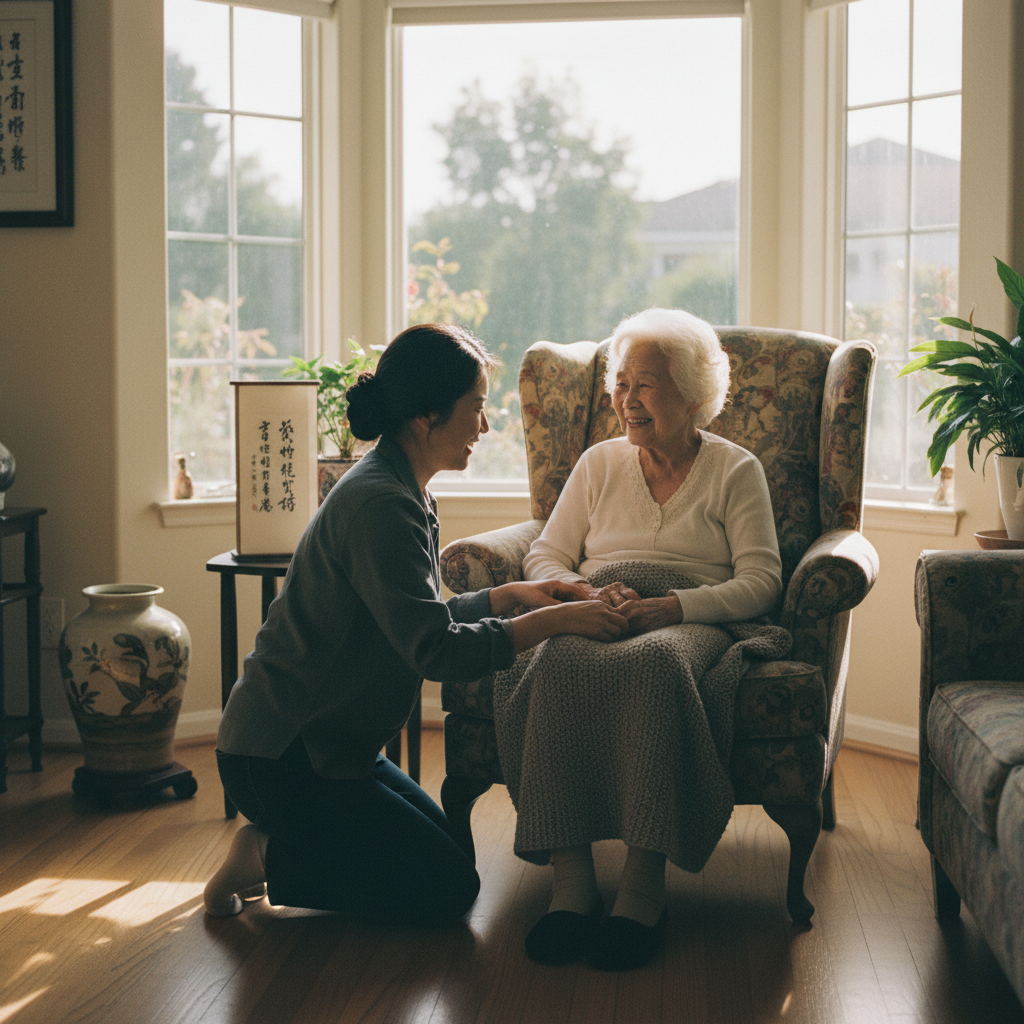
Using the content generation skill to write this Parkinson’s disease home care post for Koreatown.
Parkinson’s disease home care in Koreatown provides structured, in-home support for seniors managing one of the most complex progressive neurological conditions diagnosed in older adults. According to the National Institute on Aging, nearly one million Americans currently live with Parkinson’s disease, with approximately 90,000 new diagnoses occurring each year — making it the second most common neurodegenerative disorder after Alzheimer’s disease. For families in Koreatown, a densely residential neighborhood in central Los Angeles bounded by Olympic Boulevard, Vermont Avenue, Beverly Boulevard, and Hoover Street, accessing professional in-home care from a licensed agency removes barriers to consistent, specialized support without requiring placement in a memory care or assisted living facility. Whether your parent was recently diagnosed or has been managing symptoms for several years, professional Parkinson’s home care delivers the continuity, safety structure, and clinical awareness this condition demands.
What Is Parkinson’s Disease Home Care?
Parkinson’s disease home care is a category of in-home support specifically structured around the motor and non-motor symptoms of Parkinson’s disease (PD) — a progressive neurological disorder affecting the dopamine-producing neurons in the brain. Common motor symptoms include tremors, muscle rigidity, bradykinesia (slowed movement), and postural instability. As the disease advances, many individuals also develop non-motor symptoms including cognitive changes, depression, sleep disturbances, and difficulty swallowing.
Home care for Parkinson’s disease differs from general senior care in its emphasis on fall prevention, medication timing support, movement-based daily routines, and caregiver consistency. Because symptoms fluctuate — often more pronounced in the morning before medication takes effect — trained caregivers learn each client’s personal patterns and structure daily activities around those rhythms.
In California, in-home care agencies are regulated under Health and Safety Code §1569, which establishes licensing standards for Home Care Organizations (HCOs) operating throughout the state. A licensed agency must register its caregivers, conduct background checks through the California Department of Social Services (CDSS), and maintain appropriate liability coverage. This regulatory framework ensures that families in Koreatown receive care from vetted, monitored professionals — not unregistered independent contractors who operate without agency oversight.
Parkinson’s disease home care is most effective as a collaborative service: caregivers reinforce recommendations from your loved one’s neurologist, primary care physician, and physical therapist between clinical appointments. The goal is to extend safe, comfortable independent living at home, on a familiar schedule, in a known environment.
Who Benefits Most From Parkinson’s Disease Home Care?
Not every person with Parkinson’s disease requires professional in-home care from the moment of diagnosis. However, certain conditions and life circumstances consistently indicate that daily supportive care has become necessary for safety and quality of life.
Families in Koreatown and throughout Los Angeles typically reach out when one or more of the following situations develops:
- Your parent has experienced a fall or near-fall due to balance impairment, freezing gait episodes, or postural instability.
- Medication timing has become difficult to manage independently, and missed doses are causing unpredictable symptom fluctuations.
- Daily tasks such as bathing, dressing, or meal preparation are taking significantly longer or have become unsafe without direct assistance.
- You or another family caregiver live more than 30 minutes away and cannot provide daily monitoring.
- Your loved one has progressed to Hoehn and Yahr Stage 3 or higher, where balance impairment begins to affect functional independence.
- A spouse or primary family caregiver is approaching burnout and needs scheduled respite care to remain sustainable in the long term.
- Your parent has been discharged from a hospital or rehabilitation facility following a Parkinson’s-related complication such as aspiration pneumonia or a fall-related fracture.
Parkinson’s disease primarily affects adults over 60, though younger-onset cases do occur. In multigenerational households — common throughout Koreatown — adult children often take on informal caregiving roles before recognizing that professional support is required. The transition to licensed in-home agency care is not a failure; it is a clinically appropriate, sustainable response to a condition that will progressively exceed what one person can safely manage alone. Seniors who live alone in Koreatown’s apartment buildings carry elevated risk for unwitnessed falls and medication errors, and a structured specialized care plan substantially reduces those risks.
Services Included
Senior Home Care Givers 247 provides a comprehensive suite of Parkinson’s-focused in-home services, delivered by background-checked, CPR- and first-aid-certified caregivers. A complete overview of available services is listed at our services page.
- Medication reminders and adherence monitoring: Caregivers provide scheduled reminders for all Parkinson’s medications — including levodopa/carbidopa, dopamine agonists, and MAO-B inhibitors — and maintain an adherence log accessible to family members. Consistent timing is critical to managing “on/off” motor fluctuations.
- Fall prevention and safety supervision: Trained caregivers provide steady physical guidance and apply environmental safety protocols during high-risk activities such as rising from a seated position, navigating stairs, or walking on uneven surfaces common in older Koreatown buildings.
- Personal care assistance: Support with bathing, grooming, oral hygiene, dressing, and toileting, adapted to accommodate tremors, reduced dexterity, and rigidity. Full details are available on our personal care page.
- Meal preparation and feeding assistance: Caregivers prepare nutritious meals aligned with swallowing ability and dietary restrictions, and assist with eating when hand tremors or fatigue interfere with self-feeding.
- Mobility assistance and exercise reinforcement: Caregivers assist with ambulation using walkers or rollators, accompany clients during prescribed physical therapy exercises, and support the activity levels recommended by the treating neurologist or physical therapist.
- Companion care and cognitive engagement: Structured social interaction, reading, games, and supervised outdoor walks to address the isolation and depression frequently associated with Parkinson’s disease. Learn more on our companion care page.
- Transportation and errand coordination: Driving to medical appointments, pharmacy pickups, and local errands — eliminating the need for clients to navigate public transit or depend on family members for every outing.
- 24/7 live-in care: Around-the-clock supervision for clients requiring continuous monitoring or who live alone and cannot safely be unsupervised during nighttime hours. Details are on our 24/7 live-in care page.
- Light housekeeping and home safety maintenance: Removal of trip hazards, laundry, dishwashing, and organization of living spaces to reduce fall risk and maintain a functional home environment.
- Family caregiver respite: Scheduled relief shifts for family caregivers who need time for work, rest, or personal obligations without leaving their loved one without support.

How Parkinson’s Disease Home Care Works — From Free Assessment to Care Start
Beginning care with Senior Home Care Givers 247 follows a structured intake process designed to match each client with the right caregiver and appropriate level of support from the first day of service.
Step 1 — Free In-Home Assessment: A care coordinator visits your loved one’s residence in Koreatown at no charge. The assessment covers mobility, fall risk, current medication schedule, cognitive status, daily routine, and family caregiver involvement. This visit typically takes 45 to 60 minutes and is scheduled at a time convenient for your family.
Step 2 — Individualized Care Plan: Within 24 to 48 hours of the assessment, your care coordinator develops a written care plan detailing specific services, scheduling, and required caregiver competencies. For Parkinson’s clients, the plan includes condition-specific protocols: medication timing windows, fall prevention strategies, and communication guidelines for the treating neurologist’s office.
Step 3 — Caregiver Match: We assign a caregiver based on Parkinson’s care experience, availability, communication style, and cultural and language compatibility — an important consideration in Koreatown’s multilingual community. If you are dissatisfied with the initial match for any reason, we reassign at no penalty.
Step 4 — Care Start and Ongoing Supervision: Care begins on the agreed start date. A supervisor conducts regular evaluations and unannounced check-in visits to verify care quality and update the care plan as symptoms evolve. Family members receive consistent communication updates via phone or shared care log.
Our care coordination team is available by phone at (310) 269-1206, 24 hours a day, seven days a week. To begin the intake process, visit our contact page.
Los Angeles Neighborhoods We Serve
Senior Home Care Givers 247 provides Parkinson’s disease home care throughout Greater Los Angeles, with caregivers available seven days a week including holidays. Koreatown is among our highest-volume service areas, given the neighborhood’s large senior population and concentration of residential high-rise and apartment buildings where daily mobility support is particularly critical.
In addition to Koreatown, we serve families across the following communities:
- Beverly Hills
- Westwood
- Brentwood
- Santa Monica
- Pacific Palisades
- Hancock Park
- Culver City
- Sherman Oaks
- Studio City
- Burbank
- Pasadena
- Glendale
- Marina del Rey
- Venice
- Manhattan Beach
- Long Beach
If your neighborhood is not listed above, call us at (310) 269-1206 — our service area is expanding, and caregivers may be available near you. A full list of covered communities is on our areas we serve page.
Cost & Payment Options
Understanding the cost of Parkinson’s disease home care in Los Angeles is an essential step in long-term care planning. In 2026, private-pay hourly rates for in-home care in Los Angeles County typically range from $35 to $45 per hour, depending on care complexity, time of day, and weekly hours. Live-in care arrangements are generally billed at a flat daily rate and can be more cost-effective when 12 or more hours of daily care are needed.
Several payment pathways may reduce or offset out-of-pocket expenses:
Long-Term Care Insurance (LTCI): If your loved one holds a long-term care insurance policy, Parkinson’s disease qualifies as an eligible condition under most plans once the policyholder cannot independently perform two or more Activities of Daily Living. Verify benefit triggers and daily benefit amounts with your insurer before starting care.
Veterans Benefits — VA Aid & Attendance: Veterans and surviving spouses who require assistance with daily activities may qualify for the VA Aid & Attendance benefit, which provides a monthly cash payment intended specifically to cover in-home care costs. In 2026, maximum monthly amounts are approximately $2,300 for a veteran and $1,478 for a surviving spouse. Contact the VA or an accredited claims agent to initiate an application.
In-Home Supportive Services (IHSS): California’s IHSS program, funded through Medi-Cal, provides paid in-home personal care and domestic services to eligible seniors and people with disabilities. Income and asset limits apply. Contact the Los Angeles County IHSS office through the California Department of Social Services to request an eligibility determination.
Medicare Coverage Limitations: Original Medicare (Parts A and B) does not cover ongoing custodial or personal care services — the type of daily support most Parkinson’s clients require. Medicare covers short-term, skilled home health services (nursing, physical therapy) only following a qualifying hospital stay and only when a physician certifies medical necessity. According to the Centers for Medicare & Medicaid Services (CMS), this benefit is distinct from long-term personal care. For a full comparison of coverage by plan type, the KFF Medicare and Home Care issue brief provides an accessible, annually updated summary.
To discuss cost estimates and payment planning specific to your situation, call (310) 269-1206. We provide transparent written estimates before any commitment is required.
Why Choose Senior Home Care Givers 247
Families in Koreatown selecting a Parkinson’s home care provider should verify that any agency meets California’s minimum licensing standards under Health and Safety Code §1569 and carries appropriate liability coverage. Senior Home Care Givers 247 meets and exceeds these requirements.
- Licensed and registered: We operate as a licensed Home Care Organization under the California Department of Social Services in compliance with Health and Safety Code §1569.
- Insured and bonded: Every client engagement is covered by general liability insurance and caregiver bonding, protecting your family and home from financial exposure due to accidents or property concerns.
- Background-checked caregivers: All caregivers complete federal and state criminal background checks through the CDSS Home Care Aide Registry prior to any client assignment.
- CPR and first-aid certified: Every caregiver holds a current CPR and first-aid certification — a critical qualification when working with Parkinson’s clients at elevated risk for falls and aspiration events.
- Parkinson’s-specific ongoing training: Caregivers receive continuing education in Parkinson’s symptom management, fall prevention, medication adherence protocols, and communication strategies for clients experiencing cognitive changes.
- Medicare and Medicaid accepted: We work with Medicare Advantage plans and Medi-Cal managed care programs that include home care benefits, in addition to private pay and long-term care insurance.
- 24/7 availability: Our care coordination team and caregiver network are available around the clock — including weekends and holidays — so your loved one always has access to support when symptoms are unpredictable.
- Consistent family communication: Designated family members receive regular updates via phone or written care logs, and we coordinate directly with your loved one’s medical team when requested.
To speak with a care coordinator about Parkinson’s disease home care in Koreatown or any surrounding Los Angeles neighborhood, call (310) 269-1206 or review common questions on our frequently asked questions page.
Frequently Asked Questions
Q: What makes Parkinson’s disease home care different from general senior care in Koreatown?
Parkinson’s disease home care is structured specifically around PD symptoms — including tremors, freezing gait, postural instability, sleep disturbances, and cognitive changes — rather than the general needs of aging. Caregivers assigned to Parkinson’s clients receive condition-specific training in medication timing critical for managing on/off motor fluctuations, fall prevention techniques appropriate for postural instability, and communication strategies for clients experiencing speech or cognitive decline. In Koreatown, where many seniors live in multi-story buildings with shared elevators and common areas, this specialized preparation is particularly important for navigating everyday movement safely and without incident.
Q: Does Medicare pay for Parkinson’s disease home care in Los Angeles?
Original Medicare does not cover the ongoing personal care and daily assistance that most Parkinson’s clients require. Medicare’s home health benefit applies only to short-term, skilled services — such as physical therapy or skilled nursing — following a qualifying hospital stay, when ordered by a physician and deemed medically necessary. Custodial care, which includes help with bathing, dressing, medication reminders, and mobility assistance, is excluded from Original Medicare coverage. Some Medicare Advantage (Part C) plans offer limited home care benefits; review your plan’s Evidence of Coverage document or call our team at (310) 269-1206 for guidance on your specific options.
Q: How many care hours per week does a person with Parkinson’s disease typically need?
Care hour requirements depend on the stage of Parkinson’s disease, the presence of non-motor symptoms such as dementia or depression, and available family support. In early stages (Hoehn and Yahr Stage 1–2), four to eight hours per day of supportive care focused on medication reminders, fall prevention, and meal preparation is often sufficient. In middle to later stages (Stage 3–5), 12 or more hours of daily care or full-time live-in support may be required. A free in-home assessment by our Koreatown care coordinator will provide a specific recommendation based on your loved one’s current functional status and living environment.
Q: Can Senior Home Care Givers 247 provide a Korean-speaking caregiver in Koreatown?
Yes. Koreatown is one of the most linguistically diverse communities in Los Angeles, and we make every effort to match caregivers based on language compatibility in addition to clinical experience. Korean-speaking caregivers are available for clients who are more comfortable receiving care and instruction in Korean. Language matching requests should be noted during your initial assessment call or submitted through our contact form. This service is provided at no additional cost and is considered a standard component of our caregiver placement process rather than a specialty accommodation.
Q: What should I verify before hiring a Parkinson’s home care agency in Koreatown?
Before signing any service agreement, confirm the following: (1) the agency holds a valid Home Care Organization license under California Health and Safety Code §1569; (2) all caregivers are registered with the CDSS Home Care Aide Registry and have completed background checks; (3) caregivers hold current CPR and first-aid certification; (4) the agency has documented experience with Parkinson’s disease clients specifically; and (5) the agency provides a written, individualized care plan with a defined process for updating it as symptoms progress. Call our team at (310) 269-1206 to ask any of these questions before scheduling your free in-home assessment.
References
- National Institute on Aging — Parkinson’s Disease: Causes, Symptoms, and Treatments
- Centers for Medicare & Medicaid Services — Medicare Home Health Coverage Overview
- KFF (Kaiser Family Foundation) — Medicare and Home Care Issue Brief
Need Home Care in Koreatown?
Free, no-obligation care assessment. 24/7 availability. Care can start within days.