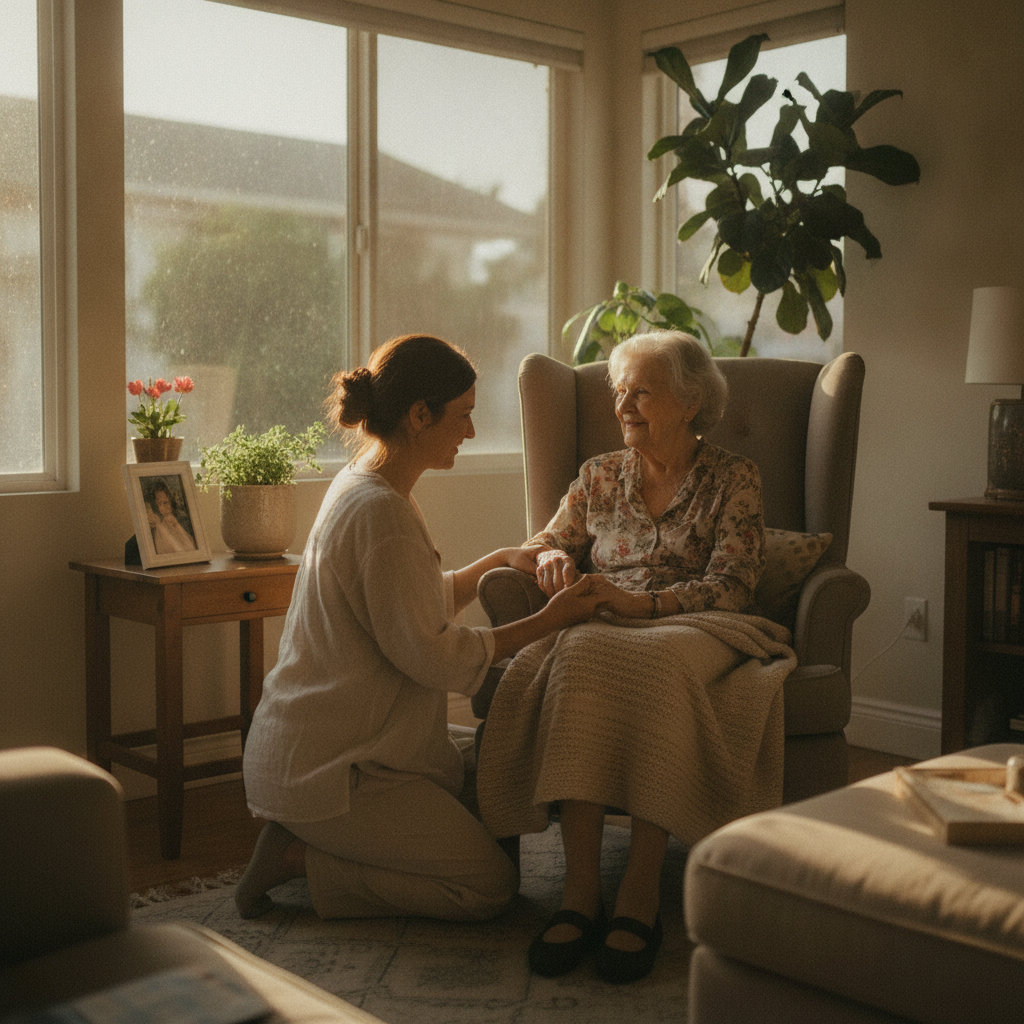
Live-in care and 24-hour care are two distinct approaches to keeping your loved one safe, supported, and independent at home in Los Angeles. Understanding the difference can help you choose the model that fits your parent’s medical condition, budget, and daily routine. According to the National Institute on Aging (2025), more than 41 million Americans provide unpaid care to adult family members, with over one-third of them living in California. Whether you’re managing a post-surgery recovery, early-stage dementia, or chronic illness, in-home care offers flexibility and dignity that institutional settings often cannot match.
What Is In-Home Care?
In-home care is a licensed, professional support service delivered by trained caregivers who come into your parent’s home to provide assistance with activities of daily living, health management, and household support. Unlike institutional care facilities, in-home care allows your loved one to remain in their familiar environment—their own bed, their own routines, and their own community.
In California, in-home care providers must comply with Health & Safety Code §1569, which sets standards for licensing, caregiver qualifications, supervision, and consumer protection. This licensing requirement means your family has legal recourse, insurance coverage, and accountability if issues arise—protections you don’t have when hiring informal caregivers through word-of-mouth or classified ads.
The core idea is simple: instead of moving your parent to a care facility, a professional caregiver becomes part of their home environment. The caregiver provides bathing, dressing, meal prep, medication reminders, transportation to doctors’ appointments, light housekeeping, companionship, and 24-hour supervision as needed. Your parent keeps their independence, their possessions, their pets, and their privacy while receiving expert support tailored to their medical and personal needs.
Who Benefits Most?
In-home care is most beneficial for seniors with specific conditions where remaining at home—rather than moving to a facility—significantly improves quality of life and outcomes:
Dementia and Alzheimer’s disease: Seniors with memory loss or confusion often show behavioral improvement when cared for in familiar settings. Facility transitions frequently trigger agitation, sundowning, and accelerated decline. A consistent caregiver in a home environment can reduce anxiety and maintain cognitive function longer.
Post-surgery recovery: After hip replacement, heart surgery, or other procedures, seniors need intensive support during the first 4–12 weeks. In-home care allows them to recover in comfort, avoid hospital-acquired infections, and follow physical therapy protocols without facility-acquired complications.
Parkinson’s disease and stroke recovery: Both conditions require targeted mobility assistance, swallowing supervision, and medication timing. Caregivers trained in these specific conditions can catch complications early and support rehabilitation goals.
Chronic illness management: Diabetes, COPD, congestive heart failure, and kidney disease require frequent monitoring, medication compliance, and dietary support. A home-based caregiver can track vital signs, report changes to physicians, and prevent emergency room visits.
Limited mobility and fall risk: Seniors who use walkers, wheelchairs, or have balance issues benefit from a caregiver present 24/7 to prevent falls, assist with transfers, and provide companionship so they don’t isolate themselves.
End-of-life and hospice care: Families often choose home care during the final months so loved ones can die in comfort, surrounded by family and dignity.
Services Included
The specific services included in in-home care depend on your parent’s condition, the care plan, and your budget. Our service menu includes:
- Personal care and hygiene: Bathing, showering, grooming, dressing, oral hygiene, toileting assistance, and incontinence management.
- Medication management: Reminders to take medications on schedule, organizing pill boxes, and reporting side effects to nurses and physicians.
- Meal preparation: Grocery shopping, meal planning, cooking, feeding assistance, dietary compliance for medical conditions, and hydration monitoring.
- Companionship and emotional support: Conversation, activity engagement, reading, playing games, watching shows together, and combating isolation and depression.
- Light housekeeping: Tidying, vacuuming, laundry, dishes, bed changes, and organizing living spaces.
- Transportation and errands: Doctor’s appointments, pharmacy runs, grocery shopping, and community outings (with caregiver accompanying).
- 24-hour live-in care: Around-the-clock presence for seniors who need overnight monitoring, fall prevention, wandering supervision, or behavioral support related to dementia.
- Specialized personal care: For conditions like Parkinson’s, Alzheimer’s, post-stroke recovery, and mobility-dependent seniors.
- Companion care: For seniors who are medically stable but need social engagement, household support, and safety oversight.
- Wound care and medical support: (Nurse-supervised) catheter care, ostomy care, wound dressing changes, and post-operative monitoring under RN oversight.

How Care Works — From Free Assessment to Care Start
The process of starting in-home care is straightforward. Your family begins with a free, in-home assessment—a licensed nurse or care coordinator visits your parent, evaluates their medical needs, mobility, medications, living environment, and daily routines. This 60–90 minute meeting identifies safety hazards, care gaps, and goals. No obligation, no sales pressure. Simply an honest evaluation of what your parent needs.
Next, the care team develops a personalized care plan that outlines specific services, hours, caregiver qualifications, and cost. If your parent qualifies for Medi-Cal, VA benefits, or long-term care insurance, we identify those opportunities and help file applications.
Then comes caregiver matching. Based on your parent’s condition, language preference, personality, and schedule, we identify a primary caregiver (and backup) from our licensed, bonded, background-checked team. You can always request a different caregiver if the fit isn’t right.
Finally, care starts—often within 2–5 days of assessment. Our 24/7 supervising nurses monitor your parent, adjust the care plan as needed, and stay in constant communication with your family. If emergencies arise, your caregiver contacts our office and the supervising RN immediately.
Los Angeles Neighborhoods We Serve
We provide in-home care throughout Greater Los Angeles and the surrounding areas. Our primary focus is West Los Angeles, where we maintain strong relationships with local physicians, hospitals, and community resources. We also serve:
Santa Monica, Beverly Hills, Westwood, Brentwood, Pacific Palisades, Studio City, Burbank, Manhattan Beach, Venice, Marina del Rey, Mar Vista, Culver City, and surrounding neighborhoods. For a complete list of service areas, visit our Areas We Serve page. If you’re unsure whether we cover your address, call us at (310) 269-1206 for immediate confirmation.
Cost & Payment Options
In-home care pricing in Los Angeles varies by service level, caregiver experience, and care intensity. As of 2026, typical rates range from $35 to $45 per hour for companion care, with live-in care (24/7) running $150–$250 per day or roughly $4,500–$7,500 per month depending on caregiver level and your parent’s acuity.
Private pay: Families without insurance can pay out-of-pocket, and many find the cost manageable compared to assisted living or skilled nursing facilities (which typically cost $6,000–$10,000+ per month in Los Angeles).
Long-term care insurance: If your parent purchased a long-term care policy before age 65, it may cover a portion or all of in-home care costs. Contact your insurance agent to confirm benefits.
VA Aid & Attendance: Veterans and surviving spouses may qualify for this U.S. Department of Veterans Affairs benefit, which can cover $2,000–$3,500 per month for in-home care. The VA website has application details.
Medi-Cal (California’s Medicaid program): Low-income seniors may qualify for In-Home Supportive Services (IHSS), which covers many in-home care expenses at no cost to the family. Eligibility depends on income and assets; we can help determine if your parent qualifies.
Medicare: Original Medicare covers skilled nursing care (wound care, injections, post-acute rehabilitation) delivered by licensed nurses, but NOT custodial care (bathing, dressing, meal prep, companionship). If your parent is homebound after surgery or hospitalization, Medicare may cover a nurse and physical therapist for 30–60 days; companion or personal care is not covered.
Why Choose senior home care Givers 247
senior home care Givers 247 is a state-licensed home care organization operating under California Health & Safety Code §1569. This licensing—and the rigorous compliance requirements that come with it—means your family receives professional oversight, insurance protection, and legal accountability that informal caregiving cannot provide.
All of our caregivers are:
- Licensed home health aides or certified nursing assistants (CNAs) with state verification
- Background-checked through California’s Department of Justice and the FBI
- Bonded and insured against liability
- CPR and first aid certified (renewed annually)
- Trained in dementia, fall prevention, mobility assistance, and person-centered care
- Supervised by licensed nurses on a daily basis
We accept Medicare, Medicaid (Medi-Cal), and private insurance when applicable. We offer 24/7 live-in care, part-time care, and on-call emergency support. Every care journey begins with a free, no-obligation assessment, and we stay in constant communication with your family through regular updates, care conferences, and an open-door contact us anytime policy.
Call (310) 269-1206 today to schedule your parent’s free assessment or ask any questions.
Frequently Asked Questions
Q: What is the difference between live-in care and 24-hour care?
Live-in care and 24-hour care are often used interchangeably, but technically: 24-hour care means a caregiver is physically present for all 24 hours, providing continuous supervision and assistance. Live-in care usually means the caregiver lives in your parent’s home but may take scheduled breaks or time off (covered by a substitute caregiver). Both models provide round-the-clock oversight. senior home care Givers 247 provides both, and our licensed nurses tailor the schedule to your parent’s needs. Call (310) 269-1206 to discuss which model suits your situation.
Q: Are senior home care Givers 247 caregivers licensed and insured?
Yes. All caregivers are licensed home health aides or certified nursing assistants, background-checked, bonded, and insured. We comply fully with California Health & Safety Code §1569, which mandates licensing, caregiver credentialing, and nursing oversight. You also receive insurance protection against liability and negligence—protections not available with informal caregiving arrangements.
Q: How quickly can care start after assessment?
In most cases, care can begin within 2–5 business days of your free assessment. We maintain a team of available caregivers and can typically match and schedule within that window. Emergency requests (post-surgery discharge, caregiver illness) are prioritized, sometimes starting within 24 hours. Contact us at (310) 269-1206 for urgent needs.
Q: Will Medicare pay for in-home care?
Medicare covers skilled nursing care (wound dressing, injections, rehabilitation) delivered by licensed nurses for a limited time after hospitalization. Medicare does NOT cover custodial or companion care (bathing, dressing, meal prep, companionship). However, many families combine Medicare-covered skilled care with private-pay companion or personal care from Senior Home Care Givers 247 to ensure 24-hour support during recovery. Ask our team about this hybrid approach during your free assessment.
Q: Does your agency serve West LA and surrounding areas?
Yes. We specialize in West Los Angeles and serve Santa Monica, Beverly Hills, Westwood, Brentwood, Pacific Palisades, Marina del Rey, Venice, and other Greater LA neighborhoods. For a complete list and to confirm your address is in our service area, visit our Areas We Serve page or call (310) 269-1206.
References
- National Institute on Aging — Aging in Place: Preparing for Home Care
- California Health & Safety Code §1569 — Licensed Home Care Organization Standards
- U.S. Department of Veterans Affairs — Aid & Attendance Benefits for Home Care
Need Home Care in West LA?
Free, no-obligation care assessment. 24/7 availability. Care can start within days.